
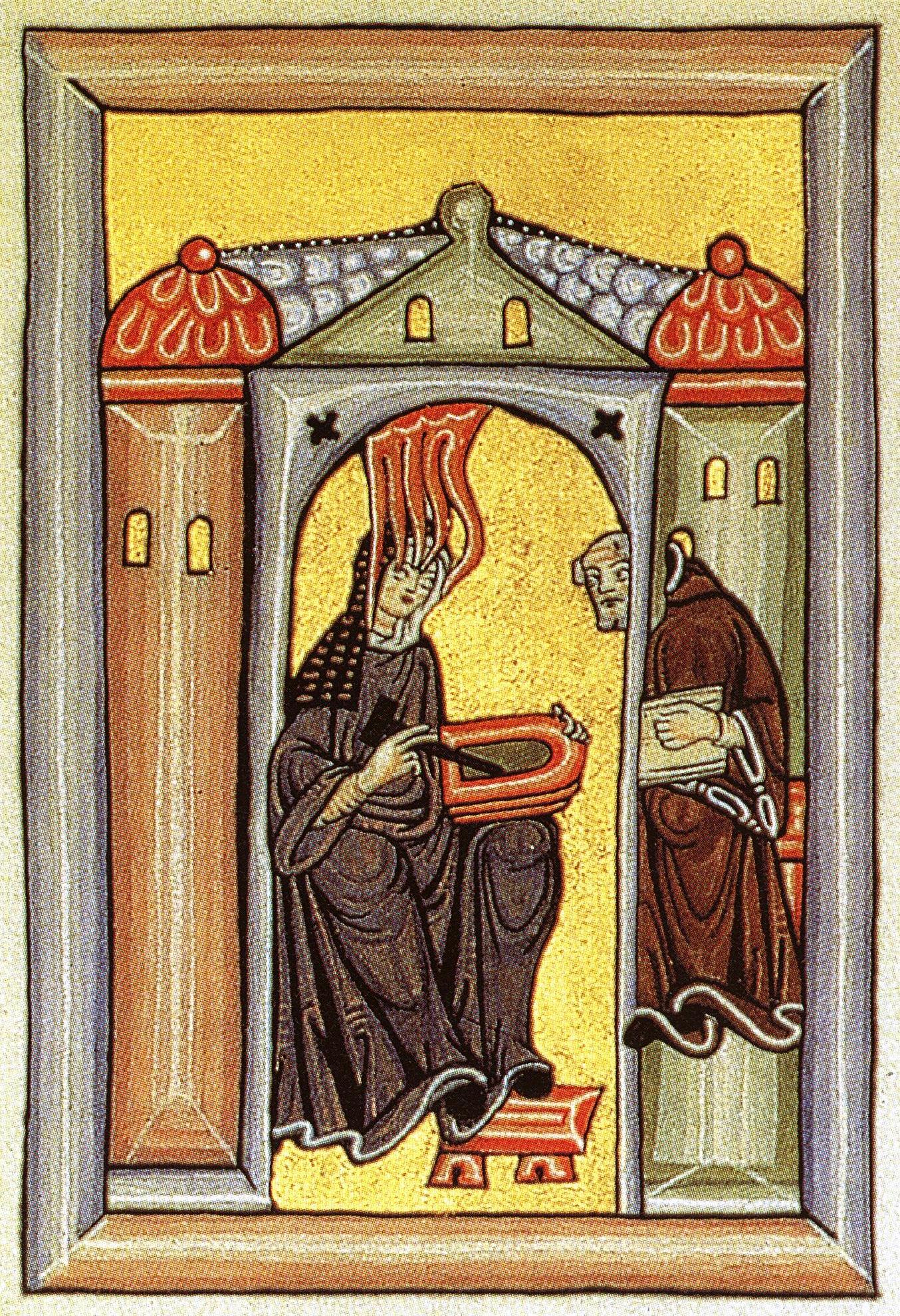
Hildegard of Bingen
Visionary Benedictine abbess whose mysticism, science, and music shaped medieval thought.
Patronage
Natural sciences, herbalism, writers, composers, visionaries, Rhineland
Virtues & Traits
Biography
Hildegard of Bingen (1098-1179) was a Benedictine abbess, mystic, scholar, composer, and writer of extraordinary range and influence. From childhood, she experienced vivid visions which she believed divine in origin; Pope Eugenius III authenticated them in 1147. She founded monasteries at Disibodenberg and Rupertsberg, becoming influential in ecclesiastical and political affairs. Hildegard wrote theological works, mystical texts, medical treatises on herbs and remedies, and composed liturgical music of remarkable beauty and complexity. Her theological writings emphasized divine love and cosmic order. She corresponded with popes, emperors, and Church leaders, and undertook preaching tours despite institutional barriers to women's public ministry. Her medical and natural philosophical writings demonstrate keen observation of creation. She was canonized in 2012. Hildegard represents a rare medieval synthesis of mysticism, intellectual authority, artistic genius, and practical wisdom.
Prayer
Prayer to Saint Hildegard of Bingen
O glorious Saint Hildegard, mystic, healer, and prophet, whose wisdom illuminated the Church and whose visions revealed the wonders of God's creation, we humbly beseech you to intercede for us before the throne of the Almighty. Grant us the grace to see the divine order in all things, to heal the wounds of body and spirit, and to live in harmony with God's design. Help us to grow in understanding and virtue, and to serve the Church with courage and devotion. Through your intercession, may we come to know the love of Christ and the communion of saints. Amen.
Generated by Find My Saint for personal reflection. Not an official Church prayer.