
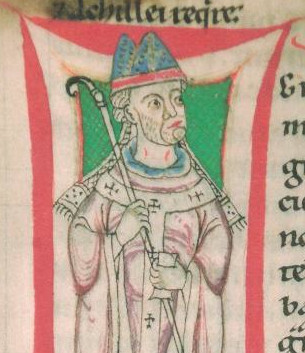
Gregory VII
Reform Pope whose principled stand for ecclesiastical independence transformed the medieval Church.
Patronage
General intercession
Virtues & Traits
Biography
Gregory VII (c. 1015-1085), born Hildebrand of Sovana, was an Italian Benedictine monk and Pope who transformed the medieval Church through radical reform. As a young man, he became a papal adviser and instrumental reformer, fighting simony and clerical corruption. Elected Pope in 1073, he implemented extensive reforms including celibacy for clergy and the elimination of lay investiture—the secular appointment of bishops. His convictions led to the famous conflict with Holy Roman Emperor Henry IV over ecclesiastical independence. At Canossa in 1077, Henry submitted to papal authority, though their conflict resumed. Gregory's insistence on Church freedom from secular control established crucial principles of ecclesiastical autonomy. Though his later years were marked by political turmoil and he died in exile at Salerno in 1085, his reforms fundamentally restructured Church governance. Gregory VII exemplified uncompromising commitment to spiritual principles against overwhelming political pressure. His legacy profoundly influenced subsequent Church-state relations and remains significant in Catholic ecclesiology and canon law.
Prayer
Prayer to Pope St. Gregory VII
O glorious Pope Saint Gregory, champion of the Church's freedom and defender of the faith, we beseech thee to intercede for us before the throne of Almighty God. Grant us the courage to stand firm in our convictions and the wisdom to uphold the dignity of Holy Mother Church. Help us to resist the corruptions of the world and to serve God with unwavering devotion. Through thy powerful intercession, may we grow in holiness and perseverance. Saint Gregory, pray for us. Amen.
Generated by Find My Saint for personal reflection. Not an official Church prayer.