
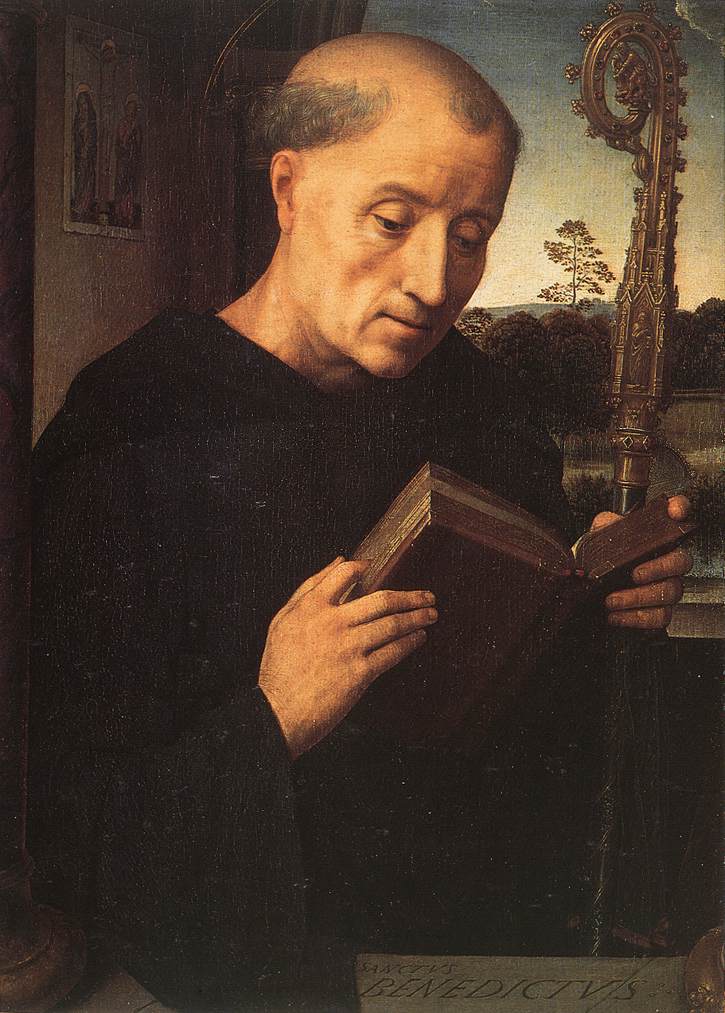
Benedikt od Nursije
Benedikt od Nursije, utemeljitelj benediktinskog reda i otac zapadnog monašstva.
Zaštitništvo
Europa, monaštvo, studenti, znanstvenici, poljoprivrednici, inženjeri, Italija, protiv trovanja, protiv vradžbina
Vrline i osobine
Životopis
Benedikt od Nursije (480.-547.) bio je talijanski redovnik i utemeljitelj benediktinskog reda, koji je postao jedan od najutjecajnijih redovničkih redova u Crkvi. Rođen u Nursiji, Benedikt je napustio svijet i povukao se u pustinju gdje je živio kao pustinjak. Tijekom vremena, mnogi su ga tražili kao duhovnog vođu, što ga je dovelo do osnivanja nekoliko manastira. Njegov najznačajniji doprinos je pisanje Benediktinskog pravila (Regula Benedicti), skupa od 73 poglavlja koja su postala temelj monaškog života u Zapadnoj Crkvi. Pravilo naglašava ravnotežu između molitve, rada i učenja, te je poznato po svojoj praktičnosti i humanosti. Benedikt je umro u manastiru Monte Cassino, koji je osnovao, a njegov utjecaj na europsku civilizaciju i razvoj Crkve ostaje neizmjeran do danas.
Molitva
Molitva svetom Benediktu Nursijskom
O slavni sveti Benedikte, uzvišeni uzore kreposti i mudrosti, ponizno te molimo da se zauzmeš za nas pred prijestoljem Svemogućega Boga. Po svetom tvom primjeru poslušnosti, siromaštva i čistoće, vodi nas putovima pravednosti i mira. Ojačaj našu odlučnost da svladamo kušnju i grijeh, i pomozi nam da izgradimo u svojim srcima samostan molitve i pobožnosti. Po moćnom tvom zauzimanju, isprosi nam milost da vjerno služimo Bogu sve dane našega života, i da na kraju postignemo vječnu nagradu obećanu vjernima. Amen.
Tradicionalna molitva iz katoličke tradicije